
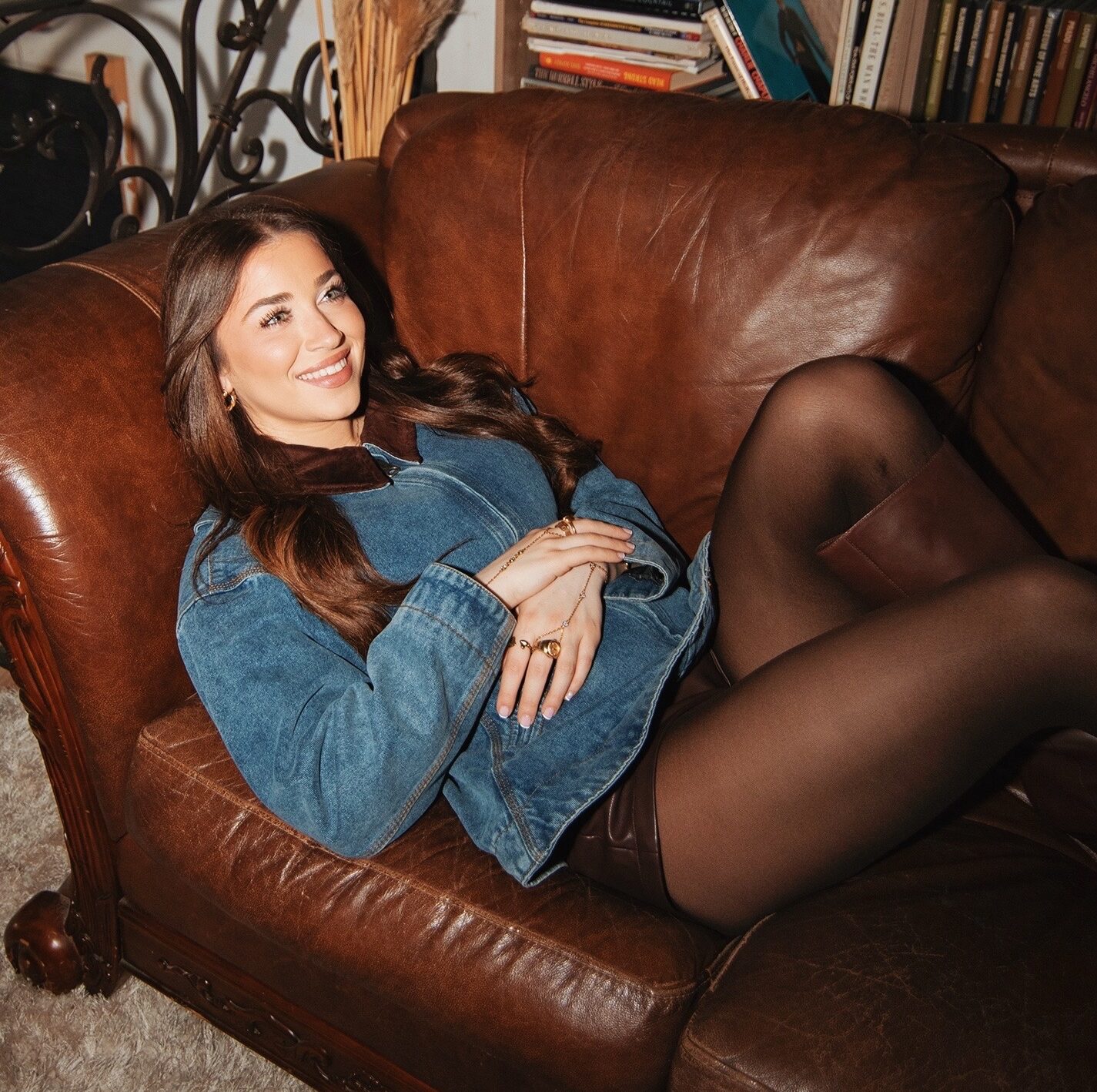
For fans of: Kelly Clarkson, Adele, Olivia Dean, Sam Smith, Demi Lovato, Lauren Spencer Smith & beyond
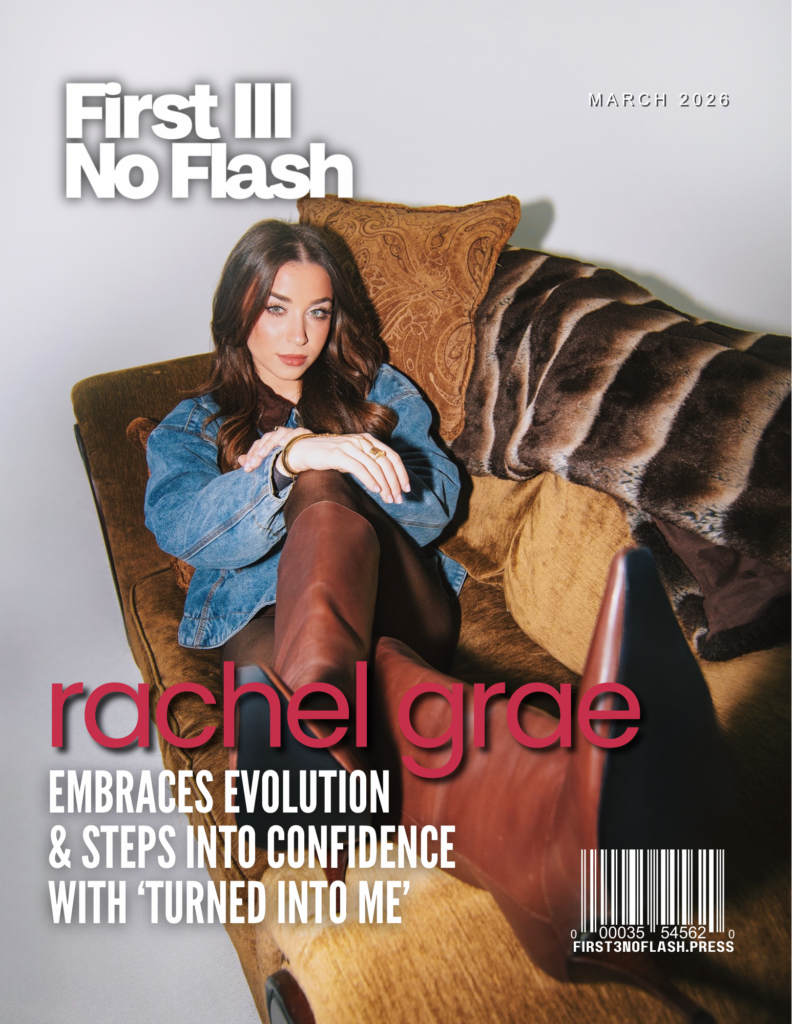
Pop singer and songwriter Rachel Grae did not come up through today’s typical artist pipeline — especially the modern “overnight” kind that you see now thanks to the growing number of social media platforms. Rachel’s story began with her posting covers online at just 10 years old — well before TikTok’s existence — building a following before she ever really stepped into a room to perform.
Before everything scaled up, Rachel describes her early days as “living [her] best Hannah Montana life,” while still going to school and figuring things out in real time. It was a low-pressure start, but one that gave her the space to build confidence on her own terms and grow into what she has created for herself. What makes her story special is that there was no cliché plot — just consistency, instinct, and the passion to share her talent with the world.
“I was very nervous. I had major stage fright, so I never performed. I was never in chorus or choir or theater. It was just me and my photo booth — all the time.”
Despite dealing with her biggest fears, she kept moving forward, asking her parents for studio time and vocal lessons by the time she was 12 years old. From there, the momentum only grew — and what started as a quiet passion quickly began turning into something much bigger.
With that momentum came identity. There’s something about Rachel that feels a little out of step — in a good way — with where pop is at right now. Her aura leans more toward that early 2000s era where things felt a little more grounded, emotionally genuine, and less polished for the sake of it all. Her music shares that same kind of warmth — easy to sit with, like a top off, windows-down drive on a sunny afternoon. It doesn’t feel forced or overly curated, and that’s part of what makes it truly stand out.
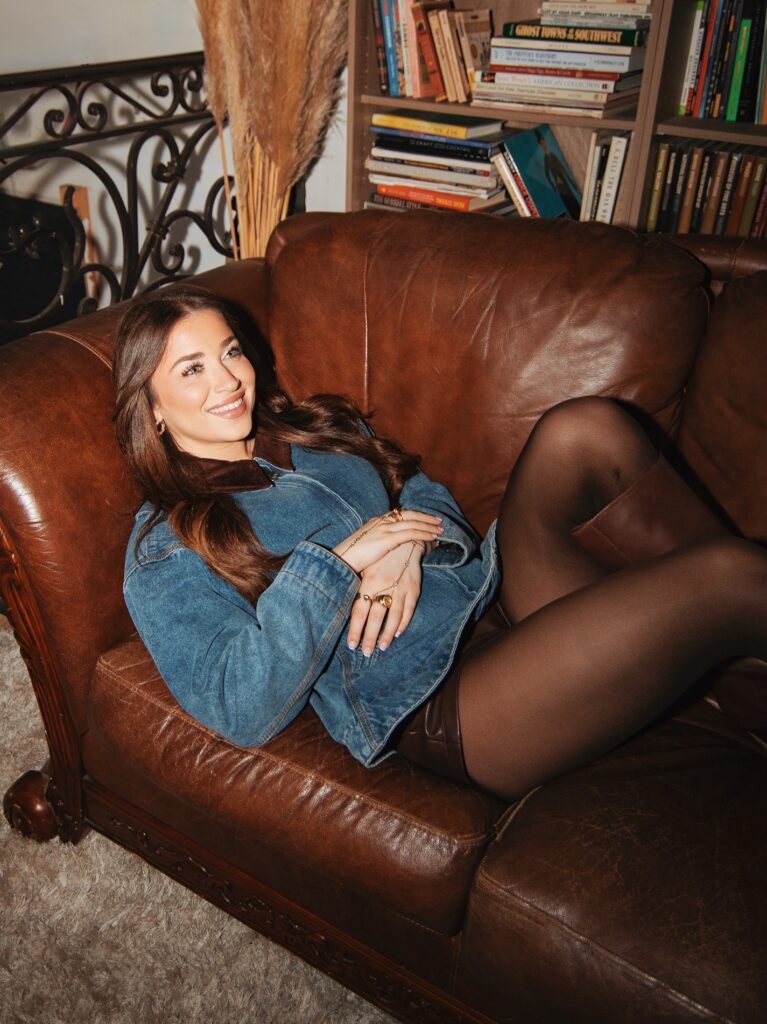
When Rachel mentioned Kelly Clarkson as a major influence, it made immediate sense. There’s a similar kind of vocal presence and emotional clarity that shines through both. However, even more so, is the way Rachel carries herself: confident without feeling the need to abide by the ever-changing industry trends. The current climate can easily sweep younger artists into a place that isn’t really who they are — something that we all observed with Kelly Clarkson in her early career — as she never strayed from her roots to compete with the likes of Britney, Christina and other heavily curated female pop artists of the same era. There is a shared portrayal of the “Miss Independent” aesthetic between the two, which highlights Rachel in a classy and empowering light, all while remaining true to herself. Rachel further lit up when dishing on her other big ballad favorites like Adele, Sam Smith, Bruno Mars, and Demi Lovato — artists who all embody that same empowering liberation. There’s a clear throughline there along with a little pinch of fresh, as Rachel also pulls inspiration from newer artists like Olivia Dean and Tate McRae.
That throughline carries straight into Rachel’s newest album, Turned Into Me, which was recently released on March 13. She centers the album around personal growth, relationships, and the emotional weight that comes with it all. Moving through themes of heartbreak, self-reflection and transformation, the record pulls from different stages of her life — yet cohesively narrates a journey that offers a broader look at how those experiences have shaped who she is now.
Becoming her modern day self wasn’t an immediate realization — it was a basket of emotions that she had to sit with, question, and ultimately write her way through. Turned Into Me doesn’t try to present a fully resolved version of who she is now. Instead, it leans into the contrast between past and present, linking what she describes as paired track listings that represent “older me versus younger me” across similar situations. Some songs come from a more confident place, while others revisit the past version of herself that was still unhealed — creating a back-and-forth that feels more reflective of genuine growth and clarity.
“I think the biggest lesson I learned was how to protect my peace and the people that should be in my life.”
That clarity, however, isn’t presented as something that arrived all at once. Throughout Turned Into Me, growth feels layered rather than linear, shaped by moments of both confidence and uncertainty that exist side by side. The album’s structure plays directly into that idea as mentioned earlier — the pairing of songs as reflections of between the “older her” and “younger her.” It’s a concept that adds a different perspective to the listening experience without ever feeling overly calculated, allowing each track to function as both a standalone moment and part of a larger scope of the record.

Instead of framing the album around one central heartbreak, Rachel draws from a broader mix of relationships and life experiences, using both past and present versions of herself to process them differently: “All the songs are personal experiences, but they’re not all about the same person,” she says. “Some I wrote as a more confident version of myself, and others I wrote as a younger me that was unhealed.” That push and pull between perspective and vulnerability is what gives the album its emotional depth, making it feel less like a polished narrative and more like an honest reflection and cycle of how people actually process change and regain their footing on a path to better themselves.
What is even more striking about the record is how concentrated the writing process was. Despite the emotional weight and intentional structuring, Rachel wrote the entirety of Turned Into Me within the span of a single month alongside Joe Janiak and Dave Gibson — approaching it with a clear vision of what she wanted to explore, while still allowing space for unexpected realizations along the way. Rather than pulling from surface-level ideas, she forced herself to revisit earlier versions of who she was, digging through journals and confronting experiences she hadn’t fully unpacked:
“It took going through my journals and really digging into who I was. There were things I realized I wasn’t healed from. And once I wrote those songs, it felt like I healed a wound at the same time.”
Still, Turned Into Me isn’t solely rooted in reflection and lifecycles. While part of the album looks backward, another part actively reaches forward, capturing a version of herself that she was still in the process of becoming. That perspective adds another layer to the project, shifting it from a retrospective body of work into something more forward-ahead — her manifestation towards a personal evolution:
“I was also writing for my future self… I was manifesting a character while healing a different one.”

The duality of healing one version of yourself while building another is what ultimately defines the album, giving it a sense of progressive motion rather than finality or end game. That focus carries through every aspect of Turned Into Me, not just in its themes — but in how it was put together, even in just a short month. Some moments are stripped down to their most exposed form, allowing the soul of her voice and lyrics to carry the emotion, while others expand into fuller arrangements that add scale without losing that sense of intimacy or relatability. “Easy For You” is completely stripped back to piano, exactly how she originally envisioned it. Rachel knew exactly how she wanted this record to track with her listeners, and for herself:
“Every step of the album was very intentional. If it didn’t feel intentional, we took the time to fix it.”
That same level of care extended beyond to the tracklist itself, with Rachel ultimately choosing to cut a song that didn’t fully align with the message she wanted to convey. She ended up replacing it with “Come A Day” — a track that felt more purposeful in what it offered both to her and to listeners. While she says her favorite track changes depending on the day, “Come A Day” stands out as one of the most meaningful — written with a sense of recognition and reflection on what her younger self needed at the time:
“Come a Day” felt like such a universal message that I’ve been wanting to write for so long… it feels like a song that I wrote for my 16-year-old self… I feel like it was able to heal a lot of people.”
And in many ways, that idea sits at the center of Turned Into Me. The album doesn’t just document growth — it reflects an awareness of it, acknowledging the younger version of herself without being defined by it. It reads like conversation rather than just closure, one that remains open-ended rather than tied up or boxed away in resolution. Rachel notes that the song “Sorry For Her” pushed her more as a writer, which echoes the message it sends — something elevated at a songwriting level, while still maintaining its place in the conversation. The track stands as my personal favorite: one that has gentle, but powerful and strong-minded vocals. It perfectly concludes the album as the last lyric reads: “I”m sorry for her, but I’m grateful she turned into me.”
Looking ahead, Rachel isn’t treating this project as a final statement. If anything, it marks the beginning of a new phase, one that continues to build on the momentum she’s already created. With more music already in progress and tentative tour plans taking shape, she’s focused on continuing to evolve: “I’ll always have more lessons to learn,” she says.
STREAM ‘TURNED INTO ME’ HERE
Website + Tiktok + Instagram + YouTube + Spotify
Photographed and written by: Nikki Phillips